

Just so you know – some links on this page are affiliate links. If you click and buy something, I may earn a small commission (think coffee money, not a luxury vacation) at no extra cost to you. I only share things I genuinely like and believe are worth it. Thanks for supporting this little corner of the internet – it really helps keep everything running.
Flowers have a way of entering a person’s attention without force. They do not demand to be understood, yet people have always returned to them for comfort, meaning, and quiet companionship. A single bloom on a windowsill can shift the feeling of a room. A wild patch along the roadside can soften even an ordinary day.
Part of their power lies in how familiar they are. Flowers are present at beginnings and endings, in celebrations, apologies, grief, and gratitude. They appear in places where words feel too heavy and in moments where words are not enough. Their presence often says something simple and true: that beauty still has a place here.
They also remind us that life is always moving through cycles. Budding, opening, fading, returning – none of it feels rushed when you pay attention closely. Flowers do not resist the season they are in. There is something grounding in that, especially in a world that often makes people feel late, behind, or out of step with themselves.
A garden never feels entirely separate from human life. Care, patience, loss, surprise, and renewal all live there together. Some things thrive with attention, and some seem to appear on their own, as if the earth has its own quiet plans. Flowers make that relationship visible in a gentle way.
Even people who know very little about plants usually have some memory tied to them. A scent from childhood, a bouquet once given, a path lined with blossoms during a certain time of year. Flowers tend to stay attached to feeling. They become part of how people remember places, seasons, and versions of themselves they once were.
Maybe that is why they continue to matter so deeply. They are delicate, but not weak. They are temporary, but not insignificant. In their own quiet way, flowers keep showing that something does not need to last forever to leave a lasting impression.
The Beauty of Blooms
Some beauty arrives in a dramatic way, but flowers rarely do. Their appeal feels softer than that, more patient, more willing to be discovered than announced. A bloom can hold a person’s attention not because it is loud, but because it feels complete in itself. It simply opens, and that is enough.
There is also something deeply restful about the way flowers exist. They do not seem burdened by self-consciousness or urgency. They grow into their shape, their color, their brief season, and they do it without apology. That kind of natural ease is part of what makes them so moving to look at.
Earth laughs in flowers.
Flowers are the music of the ground from earth’s lips spoken without sound.
There are always flowers for those who want to see them.
A flower blossoms for its own joy.
Where flowers bloom, so does hope.
Flowers don’t worry about how they’re going to bloom. They just open up and turn toward the light.
The flower that follows the sun does so even on cloudy days.
Flowers are like friends; they bring color to your world.
Look at all the beauty around you and smile at the miracle of flowers.
Flowers as Metaphors for Life
It is hard not to see pieces of human life in the world of flowers. Growth is rarely neat, and becoming something fuller often happens slowly, almost invisibly at first. What looks fragile from the outside may be rooted more deeply than anyone expects. Nature understands that strength and softness are not opposites.
Flowers also make room for difference without turning it into a problem. No blossom is asked to become another kind in order to be worthy of attention. Each one carries its own form, timing, and purpose. There is a quiet kind of wisdom in that, especially for anyone still learning how to live more honestly as themselves.
Bloom where you are planted.
Like wildflowers, you must allow yourself to grow in all the places people thought you never would.
A rose can never be a sunflower, and a sunflower can never be a rose. All flowers are beautiful in their own way.
Even the tiniest of flowers can have the toughest roots.
The flower that blooms in adversity is the most rare and beautiful of all.
If we could see the miracle of a single flower clearly, our whole life would change.
Just as a flower does not choose its color, we are not responsible for what we have become, only for what we will become.
The smallest flower is a thought, a life answering to some feature of the Great Whole.
We are all different flowers from the same garden.
What branch does not have its leaves, and what flower does not have its thorns?
The Language of Flowers
Flowers have long carried meanings that go beyond appearance. People give them to say what they cannot quite explain directly, and somehow the gesture still lands. Color, scent, variety, and season all seem to carry an emotional tone of their own. A bouquet can feel like tenderness, remembrance, apology, or devotion without a single spoken sentence.
That quiet language works because flowers leave room for feeling instead of trying to control it. They are suggestive rather than fixed, and that makes them deeply human. Different people see different things in the same bloom. One person sees joy, another sees longing, and both can be right.
A rose by any other name would smell as sweet.
Daffodils are yellow trumpets of spring.
Lotus flowers bloom most beautifully from the deepest mud.
Sunflowers paint sunshine with their petals.
Tulips whisper of passion with their bold hues.
Forget-me-nots speak of memories that linger long after goodbyes.
Orchids tell tales of rare beauty and strength.
Peonies unfold stories of prosperity and honor with each layer.
Lavender murmurs messages of tranquility and grace.
Daisies sing simple songs of innocence and purity.
Seasonal Blossoms
Flowers teach the rhythm of the year in a way calendars never can. The first signs of blooming carry a kind of relief, while late-season petals often feel touched by tenderness and farewell. Each season gives flowers a different mood, and that mood changes how a landscape is felt. Time becomes visible through them.
There is comfort in knowing that beauty is not constant, but returning. What disappears is not always gone for good. Some things need cold, waiting, or bare ground before they come back in another form. Flowers make that truth easier to trust because they live it so openly.
Summer’s heat coaxes even the shyest blooms from hiding.
Autumn flowers are the sweetest, blooming against all odds as winter approaches.
Winter flowers remind us that beauty persists even in the coldest times.
Cherry blossoms teach us the delicate art of timing and patience.
May flowers bring no joy to those who forgot to plant seeds in April.
The first crocus of spring is always the most treasured.
Fall flowers burn brightest just before they fade.
Each season brings its own bouquet of possibilities.
Snow may cover the meadow, but beneath it, flowers dream of sunlight.
Summer gardens whisper stories that winter cannot silence.
Resilience in Nature
Some of the most moving flowers are not the most perfect ones, but the ones that have clearly endured something. A stem bent by wind, petals marked by rain, blossoms growing where the soil seems poor – these things stay with a person. They make beauty feel less decorative and more hard-won. There is dignity in that kind of persistence.
Nature rarely presents resilience as dramatic triumph. More often it looks like quiet continuation. It looks like returning after damage, opening again after setback, finding a way to live within difficult conditions. Flowers reveal that endurance can be gentle and still be powerful.
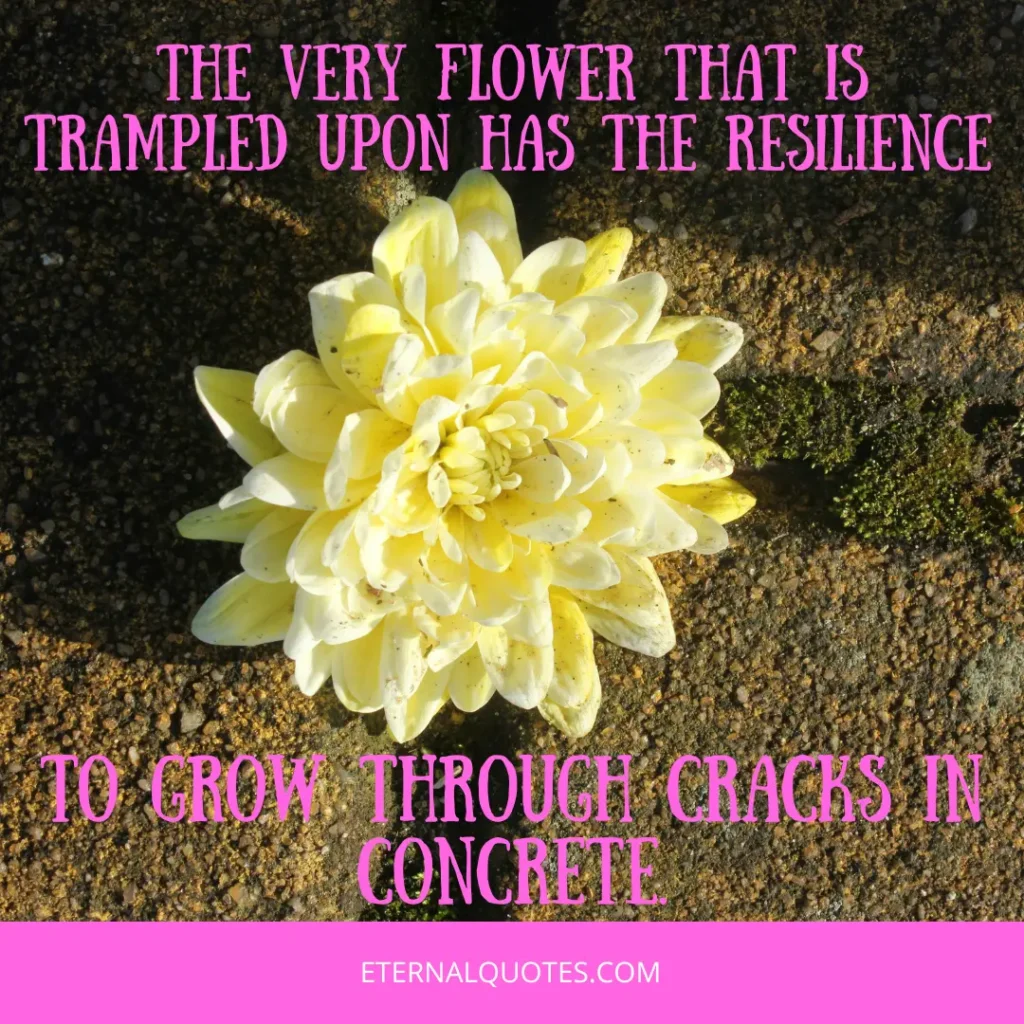
After the rain, the flowers smell best.
Even the strongest winds cannot uproot a flower that blooms from within.
Flowers grow back even after they are stepped on. So will I.
The flower that wilts in one season will bloom in another.
Storms tear petals, yet flowers persist in opening again.
A wildflower grows despite the garden’s boundaries.
Roses grow thorns not to hurt others, but to protect their bloom.
Desert flowers teach us how to thrive with little, but bloom magnificently when blessed with abundance.
Not every seed becomes a flower, but every flower was once a seed that refused to stay buried.
The most fragile-looking blooms often withstand the harshest conditions.
Garden Wisdom
A garden asks for a kind of attention that many parts of life no longer encourage. It rewards steadiness more than speed and observation more than control. You can rush through chores, but not through real cultivation. To care for growing things is to accept that effort and uncertainty will always live side by side.
That is part of why gardens often feel wiser than they look. They are full of small lessons about patience, limits, disappointment, and surprise. Not everything thrives, not everything survives, and still people return to the soil. Something in that repeated act of tending feels deeply human.
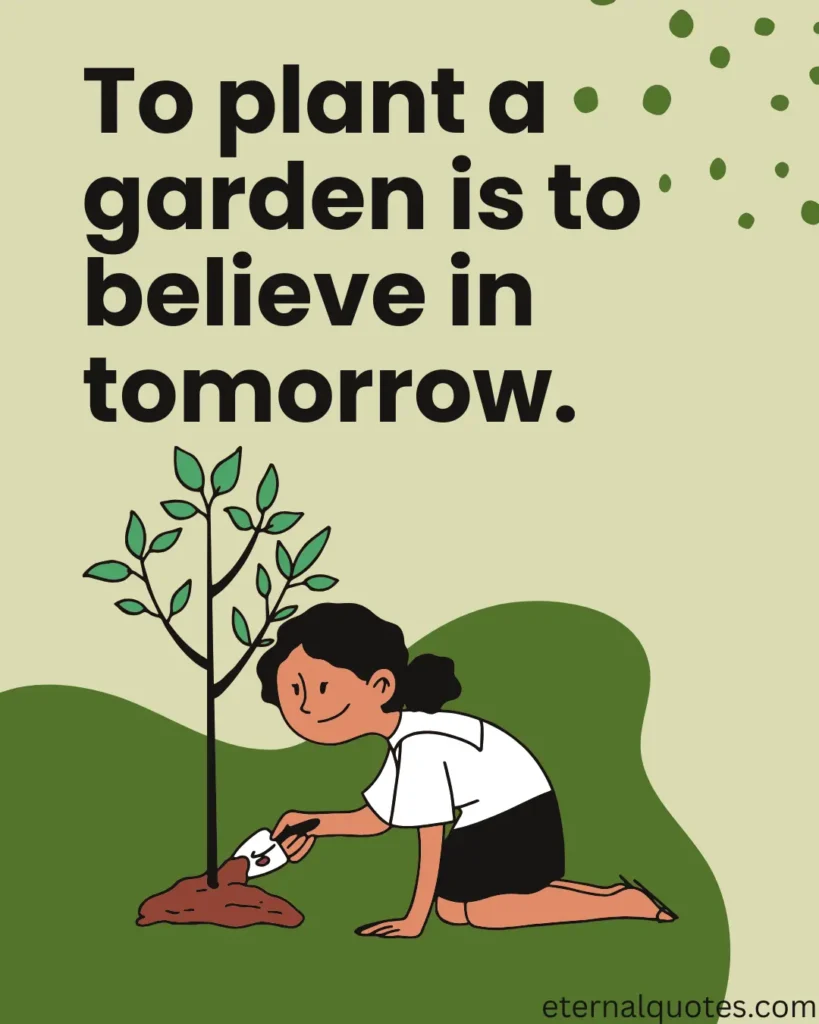
A garden requires patient labor and attention. Plants do not grow merely to satisfy ambitions or to fulfill good intentions. They thrive because someone expended effort on them.
If you have a garden and a library, you have everything you need.
A garden is always a series of losses set against a few triumphs, like life itself.
Don’t judge each day by the harvest you reap but by the seeds that you plant.
Gardens are not made by singing ‘Oh, how beautiful,’ and sitting in the shade.
Gardening is the art that uses flowers and plants as paint, and the soil and sky as canvas.
The glory of gardening: hands in the dirt, head in the sun, heart with nature.
In the garden of life, it’s the fertilizer – not just the flower – that creates growth.
You can cut all the flowers but you cannot keep spring from coming.
All gardening is landscape painting.
Wildflowers and Freedom
Wildflowers carry a different feeling from cultivated beds. They seem to belong more fully to weather, open space, accident, and chance. Their beauty is less arranged and therefore, in some ways, more stirring. They remind people that not everything meaningful has to be shaped into order first.
There is freedom in that untidy kind of grace. Wildflowers grow where they can, not where they are expected, and they do not wait for ideal conditions to begin. They turn overlooked places into something worth noticing. A ditch, a cracked edge of pavement, a field left alone too long – all of it can suddenly feel alive.
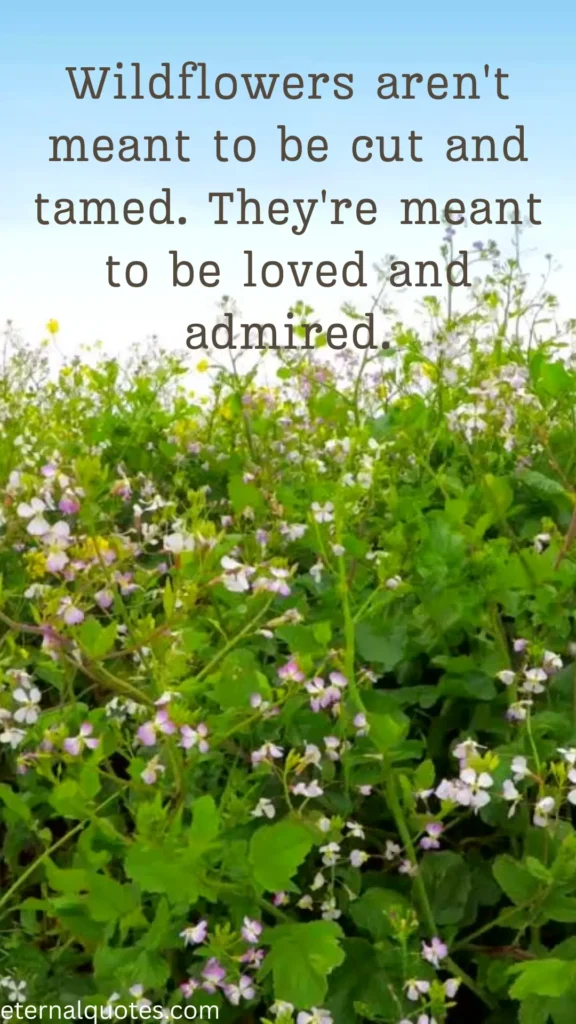
May your life be like a wildflower, growing freely in the beauty and joy of each day.
Wildflowers don’t care where they grow.
Some see weeds, others see wildflowers. It’s all in your perspective.
Wildflowers adapt and bloom wherever they land.
Nobody can own a wildflower’s beauty; it belongs to the open skies.
There’s freedom in growing wild and untamed.
Even in the concrete jungle, wildflowers find a way to bloom.
A culture that values only perfect blooms misses the wild beauty of nature’s diversity.
Wildflowers remind us that not all beautiful things need to be planned.
The call of the wildflower is heard by those who listen to their own hearts.
Flowers in Love and Romance
Flowers have always lived close to love because both speak in gestures that are easy to underestimate. A stem offered by hand can hold affection, hesitation, longing, or devotion all at once. It is a simple act, but rarely an empty one. Flowers make feeling visible without stripping it of mystery.
Romance is often remembered through details rather than declarations, and flowers fit naturally into that world. Their scent lingers after a room is empty, and their presence can turn a small moment into something memorable. Love does not always arrive grandly. Sometimes it arrives as attention, as care, as something chosen with tenderness.
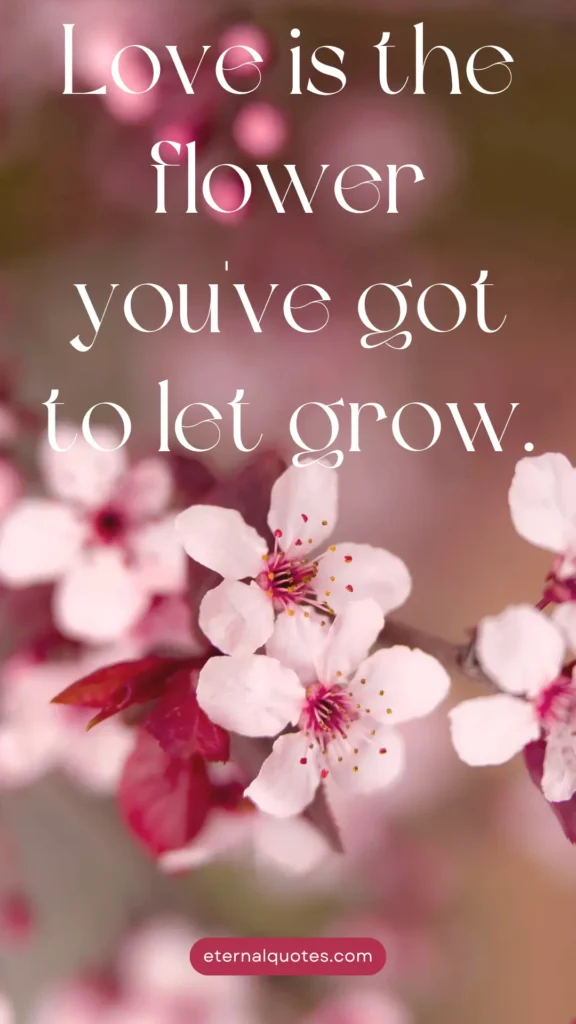
A flower cannot blossom without sunshine, and man cannot live without love.
If I had a single flower for every time I think of you, I could walk forever in my garden.
One of the most attractive things about flowers is their beautiful reserve.
When a flower is offered to you, don’t look for a thorn.
Flowers are love’s truest language.
Love is like a beautiful flower which I may not touch, but whose fragrance makes the garden a place of delight just the same.
He who wants a rose must respect the thorn.
A rose’s rarest essence lives in the thorn.
Flowers may grow in lovers’ gardens, but they blossom in lovers’ hearts.
The fragrance of flowers spreads only in the direction of the wind. But the goodness of a person spreads in all directions.
The Fleeting Nature of Beauty
Flowers do not hide the fact that beauty passes. In many ways, that is exactly what makes them so affecting. Their loveliness is bound up with change, with the knowledge that what is open now will not remain untouched. They ask a person to notice while something is still here.
There is no cruelty in that lesson, only honesty. Not everything meaningful is meant to last in its first form. Some things are precious because they are brief, and some kinds of beauty deepen when they are met with acceptance instead of resistance. Flowers make impermanence feel less like loss and more like part of the whole design.
Blossoms teach us how to embrace both the beauty of the moment and the grace of letting go.
Every flower must fade and every petal must fall, but their beauty lives on in memory.
A flower’s appeal is that it is a fleeting moment of beauty.
Flowers teach us that beauty doesn’t need to last forever to be meaningful.
Even as they fade, flowers teach us how to leave gently and beautifully.
Nothing in nature blooms all year. Be patient with yourself.
The beauty of a flower isn’t measured by how long it lasts, but by how fully it bloomed.
Flowers remind us to make peace with the cycles of growth and rest.
In their brief lives, flowers give everything they have.
The briefest blooms often carry the sweetest fragrance.
Finding Peace Among Petals
There is a reason flowers so often belong to places of stillness. A garden, a quiet path, a vase near a bed, a patch of color outside a window – all of these can change the texture of a day. Flowers do not solve a troubled mind, but they can soften its edges. They give the eye somewhere gentle to rest.
Peace often returns through small sensory things before it becomes a clear thought. Scent, light, color, and air can reach a person when language cannot. Flowers are part of that quiet return. Their presence asks very little, yet it can make a person feel less hurried and less alone in their own mind.
In the garden of meditation, flowers of peace bloom.
Flowers whisper “Beauty!” to the world, even as they fade, wilt, fall.
The calming power of flowers can settle the most troubled mind.
A flower’s fragrance soothes the soul in ways words cannot.
When anxious, find a garden. Let the flowers remind you how to breathe.
Flowers teach us the quiet strength of being both delicate and resilient.
To be overcome by the fragrance of flowers is a delectable form of defeat.
In a world full of noise, flowers speak the tranquil language of beauty.
Find rest among the flowers, where time slows and peace grows.
True peace blooms from within, just like a flower unfolds from its center.
What Flowers Leave Behind
Flowers do not stay, and yet they leave so much behind. They remain in memory through scent, color, season, and feeling. A person may forget the exact day, the room, or even the conversation, but still remember the lilies, the roses, the small wildflowers gathered by hand. That is a quiet kind of permanence.
Part of their lasting effect comes from how fully they inhabit the moment they are given. They do not hold back while they are here. They open, they brighten, they soften a space, and then they fade without pretending otherwise. There is something honest in that brief fullness that people recognize instinctively.
Flowers also teach that tenderness is not the same as weakness. Their petals bruise easily, but their return year after year tells a different story. Fragility and endurance live side by side in them. That combination is part of what makes them feel so close to the emotional life of human beings.
To notice flowers closely is to practice a slower way of seeing. It means pausing long enough to care about shape, scent, weather, light, and timing. That kind of attention can be healing in itself. It draws the mind away from constant pressure and back toward the texture of real life.
They also remind us that beauty does not always need an explanation. Some things are worth loving simply because they are here for a little while and make the world feel softer. Not every meaningful experience has to become a lesson or a plan. Sometimes it is enough to let it be felt.
Maybe that is why flowers continue to matter across so many seasons of life. They fit beside joy, grief, longing, gratitude, and peace without ever feeling out of place. They ask for very little, yet they offer a great deal. Long after the petals fall, something of their presence tends to remain.


