

Just so you know – some links on this page are affiliate links. If you click and buy something, I may earn a small commission (think coffee money, not a luxury vacation) at no extra cost to you. I only share things I genuinely like and believe are worth it. Thanks for supporting this little corner of the internet – it really helps keep everything running.
Work has a strange way of shaping the mood of a day before it has even properly started. A single email can do it. So can a calendar full of meetings, a delayed reply, or the quiet realization that the same problem from Friday is somehow still alive on Monday morning. For a lot of people, humor becomes less of a bonus and more of a coping tool.
Sarcasm often grows in places where people are expected to stay polite no matter how tired, irritated, or mentally checked out they feel. It softens frustration without pretending that frustration is not there. It lets people tell the truth in a way that feels a little safer, a little lighter. Sometimes it is the only honest language left in a room full of forced professionalism.
Modern work life comes with its own rituals, and many of them feel strangely absurd when you step back and look at them closely. The same phrases get repeated until they stop meaning anything. The same routines get dressed up as progress. Even the smallest task can start to feel theatrical when everyone is trying to sound composed while quietly running on caffeine and restraint.
That is part of why dry humor lands so well in work settings. It cuts through polished language and gets closer to the mood underneath it. Not every bad day needs a lesson, and not every difficult moment needs a cheerful spin. Sometimes it is enough to admit that something is ridiculous and let that recognition carry a little of the weight.
There is also something oddly comforting about realizing how shared these feelings are. The boredom, the eye-rolling, the low-grade disbelief at how certain things function – none of it is especially rare. Behind a lot of calm screens and professional replies, people are having the same private reactions. A bit of sarcasm simply brings that hidden layer to the surface.
Work will probably never stop producing moments that feel annoying, repetitive, or unintentionally funny. As long as it does, people will keep meeting that reality with wit, exaggeration, and a raised eyebrow. Not because everything is fine, but because humor makes some parts of the day easier to carry. It gives frustration a shape, and sometimes that alone is useful.
Monday Motivation
Monday has a way of making time feel heavier than usual. Even ordinary tasks can seem louder, earlier, and more demanding simply because the week has started again. The shift from personal time back into structured obligation is rarely graceful. It often feels like being dropped into motion before the mind has fully agreed to participate.
That is probably why Mondays inspire so much irritation and dark humor. They expose the gap between how people are supposed to feel and how they often actually feel. Fresh starts sound nice in theory, but in practice many of them begin with tired eyes and too much coffee. The mood is less about ambition and more about survival with basic manners intact.
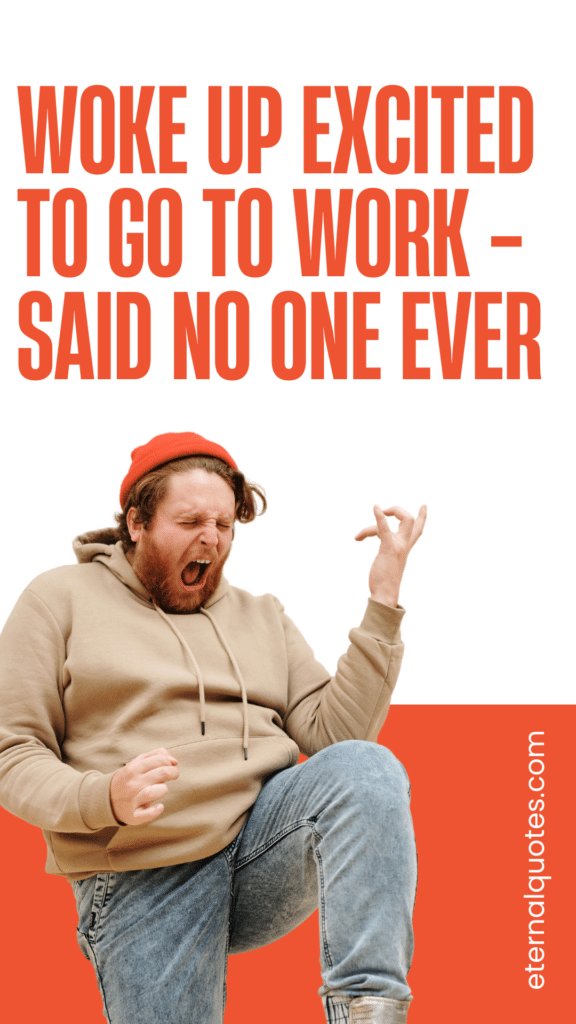
Mondays are proof that weekends are way too short
I love the smell of deadlines in the morning – said with dead eyes
Back to the grindstone – which is conveniently located in my living room now
Nothing like a meeting to remind me I exist only to forward emails
Coffee – because punching people is frowned upon
Monday called – it wants your soul
Another week to pretend I care
Running low on motivation – please send memes
Mondays are like hangovers without the fun
If I smile any harder, my face might file for workers comp
Meeting Madness
Meetings have become one of the most familiar forms of workplace theater. People gather, speak carefully, repeat what was already said, and leave with a vague sense that time has passed without much actually settling into place. Even useful meetings can carry a kind of drag. The less useful ones tend to feel endless in a very specific and memorable way.
Part of the frustration comes from how ordinary the ritual has become. A meeting can interrupt concentration, drain momentum, and still present itself as productive simply because it happened. The language is often polished, but the mood underneath can be restlessness, resignation, or quiet disbelief. It is no surprise that so much workplace sarcasm gathers here.
Let’s circle back never
I survived another meeting that should have been an email
If I had a dollar for every meeting, I’d retire from meetings
Speak up – I need more nonsense to ignore
Meetings – where minutes are taken and hours are wasted
Nothing boosts productivity like pretending to listen
I bring snacks to meetings so I don’t scream
That’s a great idea – let’s not do that
Just here to nod and mentally scream
I came, I saw, I zoned out
Corporate Lingo Chronicles
Workplace language often starts as shorthand and ends up sounding like a code no one fully believes in. Simple ideas get padded with official phrases until they lose their original shape. People learn to speak in these patterns because that is what the environment rewards. After a while, the words begin to feel detached from anything real.
That distance is part of what makes corporate lingo so easy to mock. It turns ordinary conversations into performances and gives even minor tasks a strange ceremonial weight. Underneath the polished wording, the same old confusion, delay, and miscommunication usually remain. Sometimes the most absurd part of the day is not what happened, but the way everyone is expected to describe it.
Synergy sounds like a disease
Can you touch base later – I’m avoiding human contact
I’ll loop you in – and out of my life
Let’s drill down – into madness
Low-hanging fruit is already rotten
We’re leveraging chaos as a strategy
Taking this offline – so I can ignore it forever
Let’s not reinvent the wheel – but let’s also never fix it
Action items – because tasks sound too honest
I don’t have bandwidth – but I do have sarcasm
Email Insanity
Email has a way of compressing annoyance into a very neat format. A few polite lines can carry urgency, blame, confusion, or complete avoidance without ever saying so directly. People learn to read tone between the spaces, not just in the words themselves. That subtle tension is part of what makes inbox culture so exhausting.
There is also something oddly repetitive about it all. The same greetings, the same sign-offs, the same attachment sent again because it somehow vanished into the same thread where it was already sitting. Courtesy becomes mechanical, and irritation gets folded into phrasing that sounds kind on the surface. It creates the perfect conditions for dry humor to thrive.

Hope this finds you well – because I’m not
Just circling back – like a vulture
Kind regards – mild contempt
Best – not even close
I’ve attached what you ignored the first time
No worries if not – but I will silently judge you
Happy to help – once I’m done crying
Please see attached – because apparently reading is optional
Thanks in advance – for doing the bare minimum
Let me know your thoughts – or don’t
Productivity Lies
Productivity is one of those ideas that sounds clean and measurable until real life gets involved. Most workdays are not made of smooth momentum and completed checklists. They are made of interruptions, shifting priorities, unfinished tasks, and the small mental resets that happen after every distraction. Even capable people can end a day feeling busy and oddly unaccomplished at the same time.
That tension creates a special kind of workplace guilt. People want to feel in control, but the structure of many jobs makes that difficult from the start. The pressure to look efficient often becomes stronger than the reality of being effective. Somewhere in that gap, humor shows up and says what people are too tired to explain seriously.
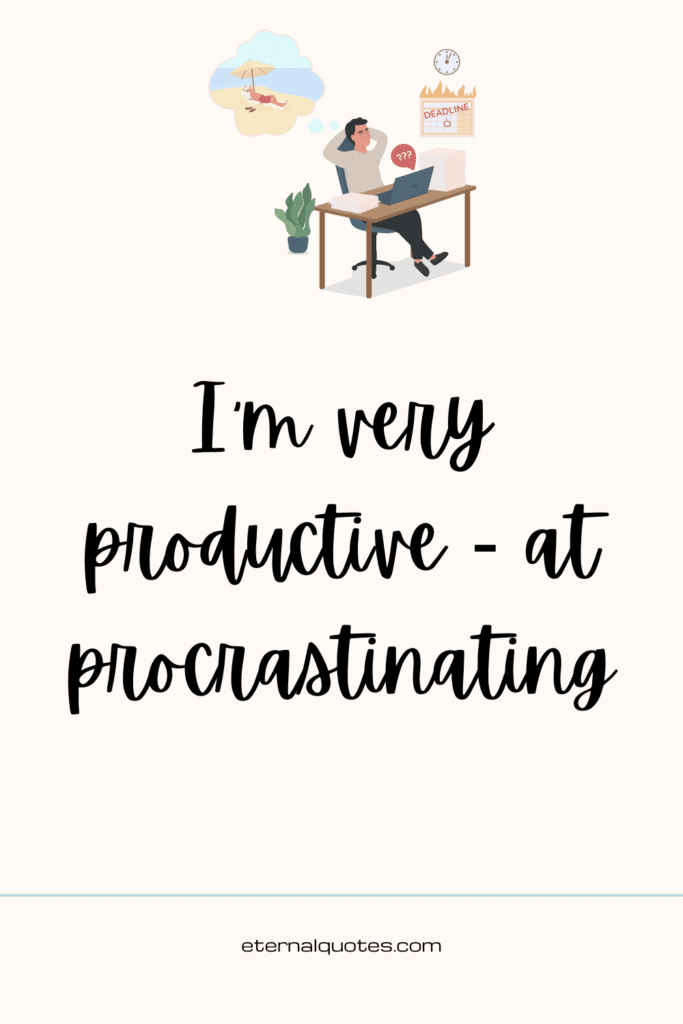
My to-do list is just decoration at this point
I work best under pressure – and panic
Multitasking – failing at multiple things at once
Busy is my default lie
I have a system – it’s called chaos
Every task is urgent – if you ignore it long enough
I get things done – eventually
The only thing growing is my email count
Checked one thing off my list – added five more
I measure success by how few people talk to me
Remote Work Realities
Working from home changed the appearance of work, but not necessarily its pressure. The setting may be more familiar, the clothes more forgiving, and the commute almost nonexistent, yet the same expectations still follow people into private space. The line between being available and simply being present can blur very quickly. Home stops feeling entirely like home when it also has to function as an office.
That overlap creates its own strange rhythm. Domestic life stays close at hand while professional language continues as if everything is tidy, focused, and under control. There is something quietly absurd about switching from muted calls to dishes, from spreadsheets to parcels at the door, from serious updates to a frozen screen. Remote work can be convenient, but it can also feel deeply surreal.
Pajamas are business casual now
Sorry I missed the call – I was emotionally unavailable
Yes I’m working – no you can’t see my screen
My mic is muted – like my enthusiasm
The camera is off for your safety
Home office – where the distractions never clock out
I’m online – and offline mentally
Sorry for the delay – I was staring into the void
Time zones are my newest excuse
Productivity peaks when the WiFi dies
Micromanager Mayhem
Few workplace dynamics create tension as quickly as being watched too closely. It is difficult to do anything well when trust feels thin and every task seems to come with an invisible audience. Constant checking can make even simple work feel stiff and overcomplicated. Instead of support, it often creates self-consciousness and quiet resentment.
Control has a way of disguising itself as involvement. On the surface it can look like diligence, but underneath it usually signals discomfort, anxiety, or an inability to let people work without interference. The result is rarely clarity. More often it produces repetition, defensiveness, and the exhausting feeling of being managed and doubted at the same time.
I see you’ve assigned me a task I was already doing
Micro means small – like your trust in me
I love repeating myself – said no employee ever
I’ll get right on that – in an alternate universe
Watching me work doesn’t make it go faster
Hover harder – I dare you
Please manage yourself before managing me
Another meeting to discuss why we’re behind – perfect
I don’t need help doing nothing
Delegation means giving me the job and the blame
Paycheck Philosophy
Money changes the tone of work in ways people do not always say out loud. It affects patience, tolerance, ambition, and the stories people tell themselves about why they stay where they are. A paycheck can be a comfort, a necessity, a compromise, or all three at once. It is often the most practical reason beneath the most polished professional language.
That practical truth can strip away a lot of illusion. Not everyone is working from passion, and even those who care about what they do still have bills, fatigue, and limits. When effort and reward feel badly matched, humor becomes a sharp way of naming that imbalance. It does not solve anything, but it does make the reality feel less lonely.
My job is 90 percent waiting for payday
Living for the weekend – and barely
My salary is a prank
I pretend to work – they pretend to pay me
Paid in exposure to stress
I’d complain more, but I enjoy eating
Raises are like unicorns – mythical and rare
Can’t buy happiness – or groceries apparently
I came for the benefits – I stayed for the health insurance
Every direct deposit feels like hush money
Co-Worker Shenanigans
Work is rarely just about the tasks themselves. It is also about proximity, personality, mood, and the low-level social negotiation of getting through shared days with other people. Some coworkers make the hours lighter, while others make simple interactions feel strangely complicated. Most workplaces contain a bit of both at once.
That mix is what makes coworker dynamics so memorable and so easy to joke about. Small habits become office legends. Minor tensions take on a life of their own. Even harmless chatter can start to feel like part of the daily soundtrack, familiar enough to be annoying and oddly comforting in the same breath.
Watercooler chat is my cardio
Team player – mostly in the sport of avoidance
Group project energy – with adult-sized problems
I see we’ve entered the passive-aggressive Olympics
Collaboration means cleaning up their mess
Thanks for the input – now go away
Everyone’s working hard – at looking busy
I thrive in toxic environments – like a mushroom
Gossip is my preferred team-building exercise
You inspire me – to stay quiet
Exit Strategy Dreams
Almost every difficult job eventually produces fantasies of leaving. Sometimes they are serious plans, and sometimes they are just small mental escapes that make a long afternoon easier to tolerate. The thought of a different life can become its own quiet habit. It appears in browser tabs, half-finished documents, and brief moments of staring past the screen.
Wanting out does not always mean collapse or failure. Sometimes it simply means a person has reached the edge of what they can keep justifying to themselves. Restlessness can build slowly, almost politely, until it starts shaping the whole tone of a day. By then, even humor about leaving carries more truth than exaggeration.
Updating LinkedIn is my side hustle
If sarcasm paid well, I’d be retired
Daydreaming of quitting is my main task
One more email and I’ll fake a power outage
My resignation letter is a Google Doc away
Counting down to never again
Just here until my lottery ticket hits
I stay out of spite and dental coverage
This isn’t burnout – it’s a slow escape
I’m not quitting – I’m strategically disappearing
When the Joke Feels a Little Too Accurate
Workplace sarcasm lasts because it often says what people do not feel free to say plainly. It notices the gap between the official version of things and the lived one. That gap can be funny, but it can also be tiring. A joke lands especially well when it carries just enough truth to make someone pause after laughing.
Not every complaint needs to become a crisis, and not every rough day needs to be turned into a personal growth lesson. Sometimes people are simply worn out by routine, by repetition, or by the strange pressure to act unaffected by what drains them. Humor gives that feeling a release valve. It allows honesty without demanding a full confession.
There is something deeply familiar about the small absurdities of working life. The language, the rituals, the forced enthusiasm, the delayed replies, the calendar invites that arrive like threats – all of it becomes part of a shared atmosphere. Even when jobs differ, the emotional weather can feel very similar. That is part of why this kind of humor travels so easily from one person to another.
It also reminds people that frustration is not always a private failure. Feeling bored, underwhelmed, overstretched, or quietly irritated does not mean someone is lazy or ungrateful. Often it just means they are paying attention to the reality in front of them. A dry remark can sometimes restore a sense of perspective faster than a long serious explanation.
Of course, sarcasm does not fix workloads, difficult managers, or the dull ache of being stuck somewhere that no longer fits. But it does create a little room to breathe. It breaks the polished surface and lets some humanity back in. Even a sharp joke can feel oddly grounding when the day has become too artificial.
Maybe that is the real value in all of it. Beneath the eye rolls and exaggerated one-liners is a simple need to recognize experience as it is, not as it is packaged. Work can be necessary, ridiculous, exhausting, and funny all at once. Admitting that does not make anyone cynical. Sometimes it just makes them honest.


